Step 1: Driver education comes first
For minors, California requires driver education before the instruction permit stage. The DMV says driver education covers traffic laws, road safety, responsibilities, and accident prevention.
You can review the current process through the California DMV teen driver roadmap and the driver training school guide.
Step 2: Get the instruction permit
The DMV says teens generally need to be between 15 and 17 1/2 to apply for a learner’s permit, complete the application process, and visit a DMV office to finish the permit steps.
Families should always re-check the official DMV requirements before scheduling because permit details and application steps are too important to assume from memory.
Step 3: Complete professional behind-the-wheel training
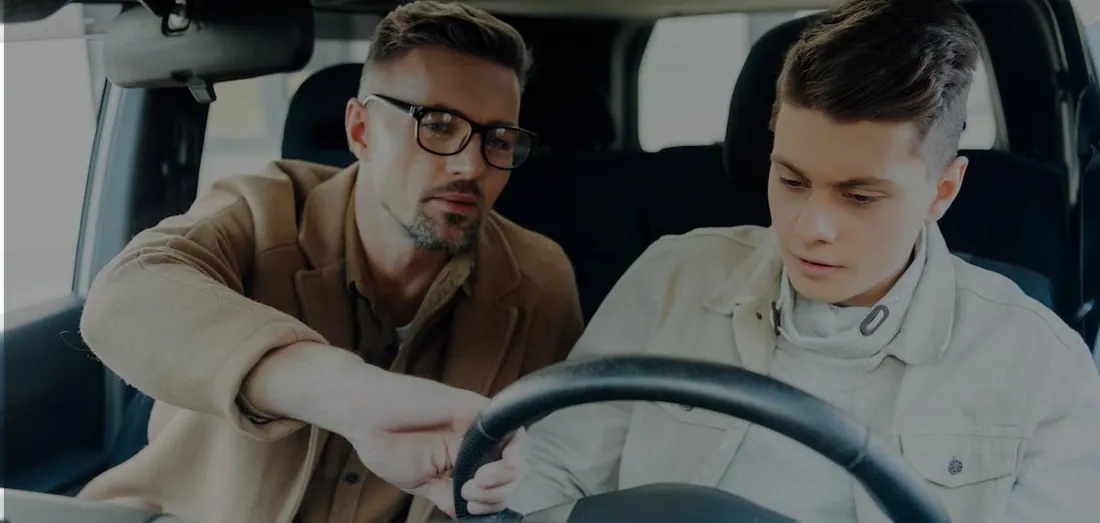
California requires at least six hours of behind-the-wheel training with a professional driving instructor for minors. The DMV also says this training cannot exceed two hours per day for the counted professional instruction time.
The permit becomes valid after it is signed by the professional instructor once the teen has completed at least one hour of behind-the-wheel training.
Step 4: Finish supervised practice
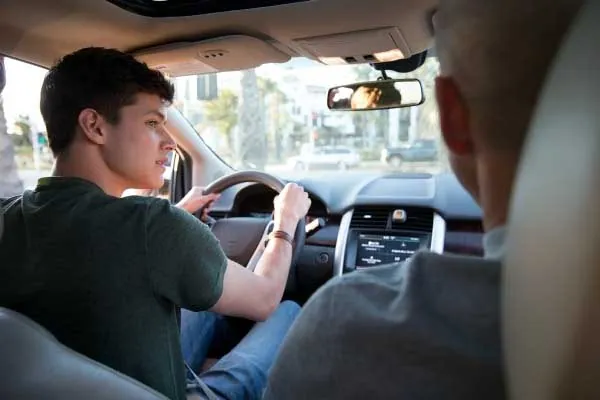
In addition to professional instruction, minors must hold the permit for at least six months before testing and complete 50 hours of supervised practice, including 10 hours at night.
That is one reason professional lessons help so much. They give families a safer foundation for the at-home practice that follows.
Step 5: Prepare for the road test
Once the student can handle the basics with more consistency, the final stage becomes road-test preparation. That usually means observation, stops, lane changes, parking, and staying calm under instruction.
If your teen is getting close, the DMV road-test prep package can be a useful final step.
What this means when choosing lessons
A six-hour package covers the professional minimum for many teens, but it is not automatically the right choice for every family. The better package depends on the student’s starting point, confidence, and how much quality practice will happen between lessons.
- Compare 6 hours vs 10 hours if you are choosing a package.
- Use the parent checklist before the first lesson.
- See teen driving lessons in Burbank for package options.
Why the order matters
Teen driving progress usually goes more smoothly when the permit timeline, lessons, and home practice work together instead of feeling like separate tasks. Families often run into problems when they wait too long between lessons or leave important practice areas until the last minute.
A better approach is to use the formal lessons to build safe habits, then reinforce those habits through steady home practice. That creates much better carryover than trying to fit everything into a rushed final stretch.